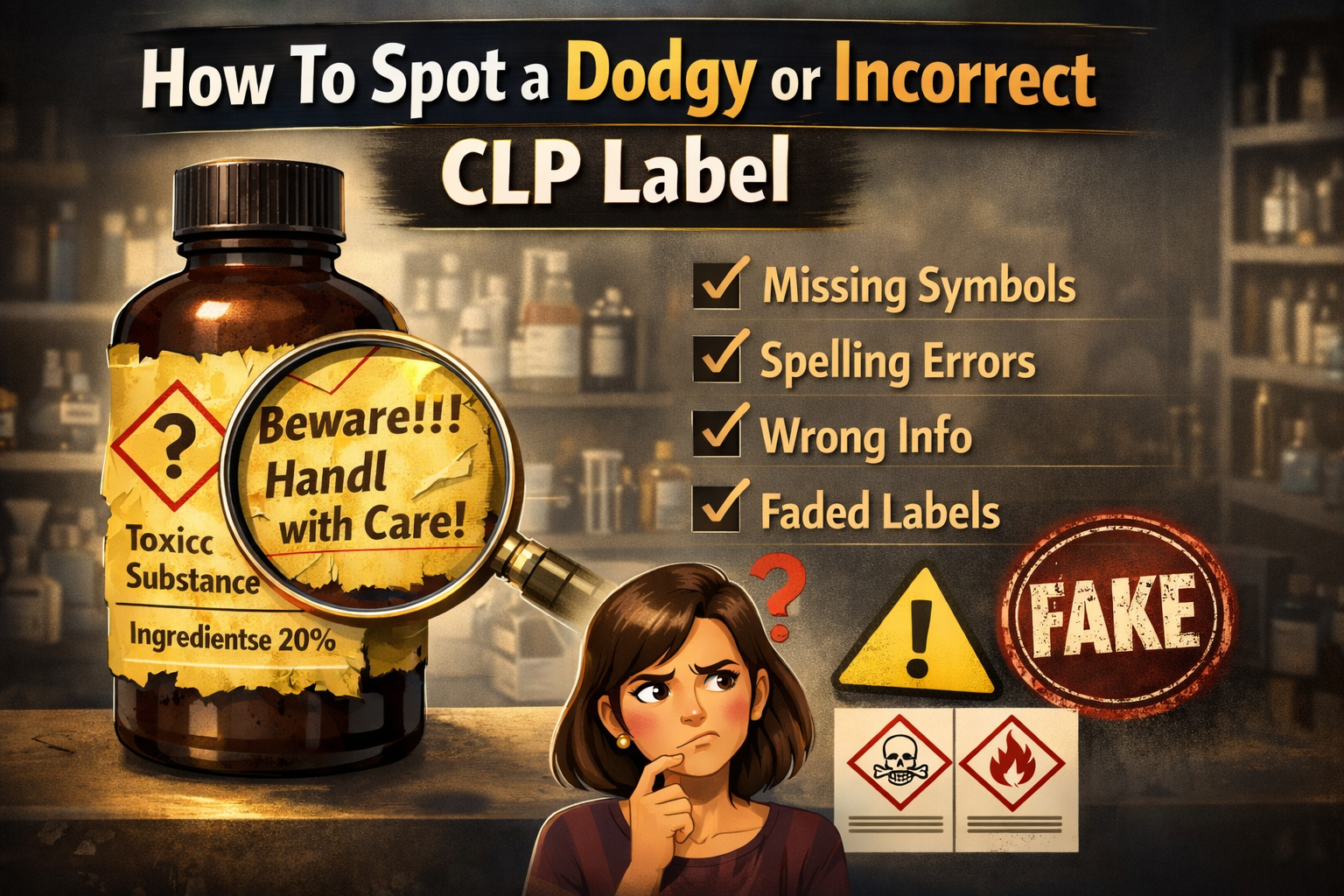
How To Spot a Dodgy or Incorrect CLP Label
If you use fragrance oils, you have probably seen a CLP label that just does not look right. Maybe the chemical list is suspiciously short. Maybe the SDS shows hazards but the CLP shows none. Maybe the supplier’s “10 percent CLP” magically changes the classification of an oil that everyone else says is sensitising.
Most of the time people are not being malicious. Mistakes, outdated templates and sloppy copying happen all the time. This guide shows you how to spot when something looks off so you can keep your products compliant and avoid using a label that could get you into trouble.
If you have not read my SDS beginner guide yet, start there. It explains what an SDS actually is and what makers really use it for.
Read: What an SDS actually is and what makers really need it for
1. Chemicals on the CLP do not match the SDS
This is the easiest mistake to spot. The SDS lists specific allergens and hazardous ingredients. The CLP should show a simplified version of those allergens above 0.01 percent and any ingredients that trigger the hazard classification.
It looks suspicious when:
- The SDS lists a long allergen section but the CLP lists none.
- The SDS has hazardous ingredients yet the CLP looks oddly empty.
- The CLP lists completely different substances that are not mentioned on the SDS at all.
None of these are automatically proof of wrongdoing. But if the two documents do not resemble each other at all, something is usually wrong.
2. The pictograms do not make sense
If Section 2 of the neat SDS shows hazards such as Skin Sensitisation or Aquatic Toxicity, you would usually expect the finished CLP to reflect that at normal home fragrance usage levels.
Red flag moments include:
- The SDS shows hazards but the CLP has no pictograms where you would expect them.
- The CLP includes pictograms that do not appear anywhere in the SDS.
- The CLP looks excessively dramatic for a product diluted in a non hazardous base.
Pictograms must match the actual classification of your finished product. They are never chosen based on guesswork.
3. The percentages do not look believable
This one confuses a lot of makers. A mismatch between the SDS and CLP is not always wrong.
For example:
- The neat SDS can show allergens and hazards.
- But at your usage level in wax or melts, the final product may not classify at all.
- In that case a supplier may provide a label that simply says “Safety data sheet available on request”.
This is legitimate when the dilution genuinely removes all hazards.
It becomes questionable when the SDS shows harsh hazards.
Blank CLPs are usually only correct when the true usage level is very low and the hazard thresholds are not met.
4. The CLP wording looks suspicious or incomplete
Some signs that a CLP may not be correct:
- Missing mandatory statements such as the General Warning Pictogram where required.
- Hazard statements cut off or written incorrectly.
- Allergens missing that clearly appear on the SDS above 0.01 percent.
- Typo filled ingredient names that do not match the SDS at all.
None of these guarantee the CLP is unusable, but they should prompt you to double check.
Final Thoughts
You do not need to become a chemist to spot when something looks off. Just remember:
- The SDS is your reference document.
- CLP should never disagree with it without a sensible reason.
- Blank CLPs are only correct when the real dilution removes all hazards.
- Pictograms must make sense for the finished product.
- If something feels wrong, it usually is.
Cross checking a CLP takes a couple of minutes and can save you from selling a product with the wrong classification.
Share:
How To Read An IFRA Certificate: Simple Guide For UK Home Fragrance Makers
Safety Labels Explained: Do You Need Them If You Already Have CLP?