CLP Labels for Wax Melts (UK GB CLP Printing)
Custom GB CLP labels for wax melts, structured using your fragrance supplier’s classification data and professionally printed in the UK.
Designed for clamshells, snap bars, boxed melts and multi-segment formats. Clear layout. Accurate hazard presentation. No generic templates.
Choose Your Wax Melt CLP Format
Standard Wax Melt CLP Label
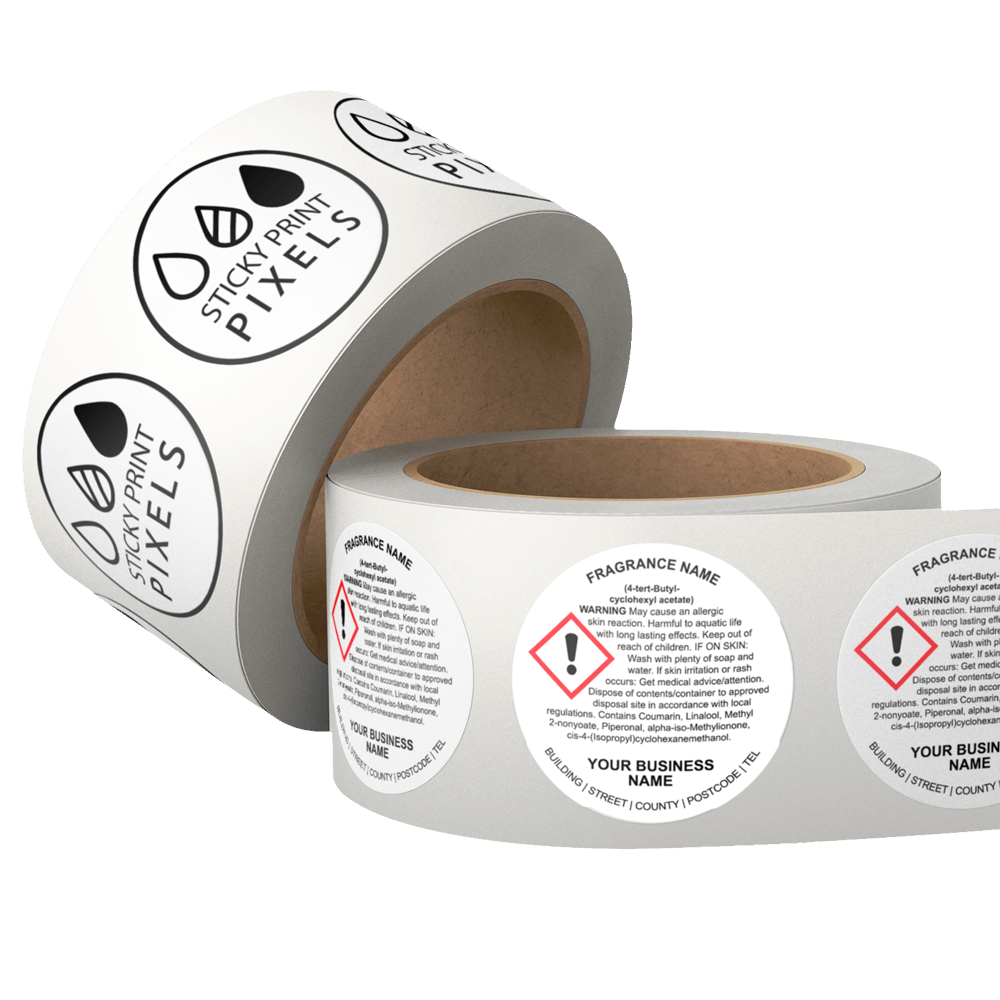
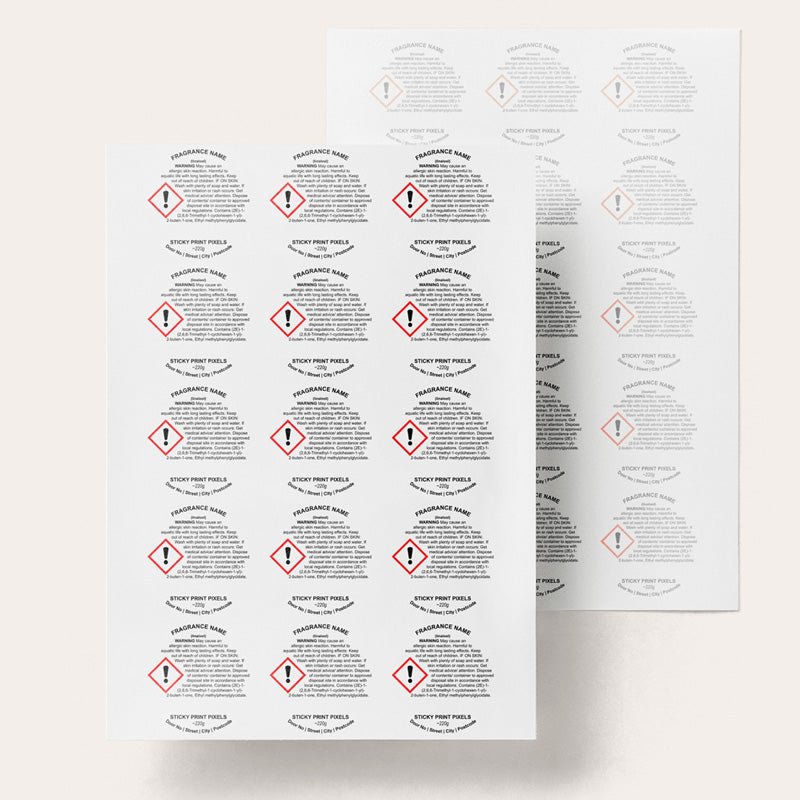
Clean, professionally structured layout suitable for clamshells, snap bars and simple packaging. Displays required hazard information clearly and professionally using your supplier’s CLP data.
Structured using your supplier’s GB CLP classification data.
Wax Melt CLP Labels with Logo
Add your business name or logo to your wax melt CLP labels for a more branded, retail-ready finish. Each layout is structured using your supplier’s CLP classification data while keeping required hazard information clear and correctly positioned.


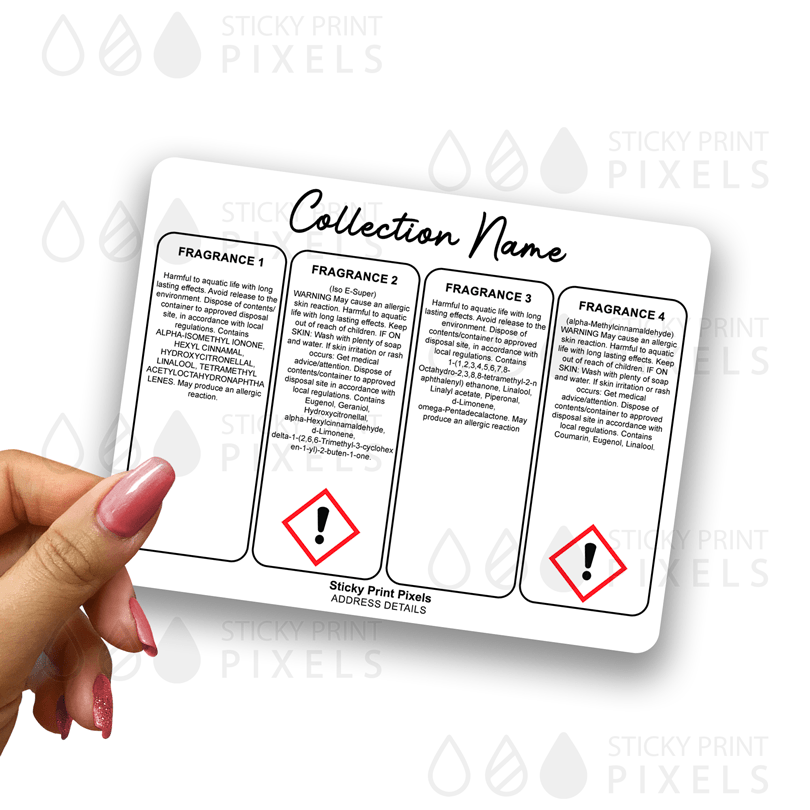
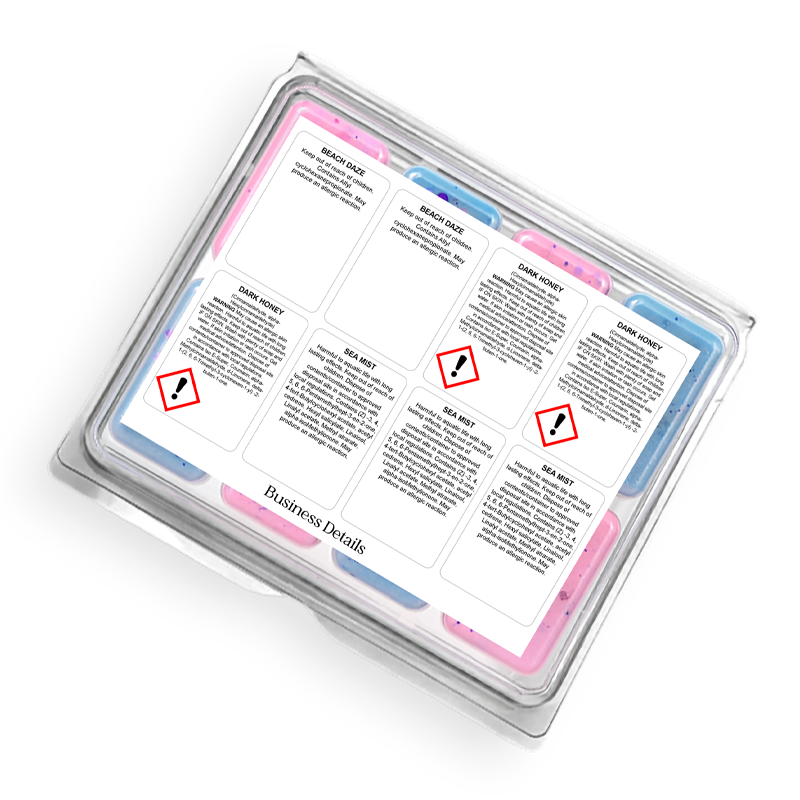
Multi-Section Wax Melt CLP Labels
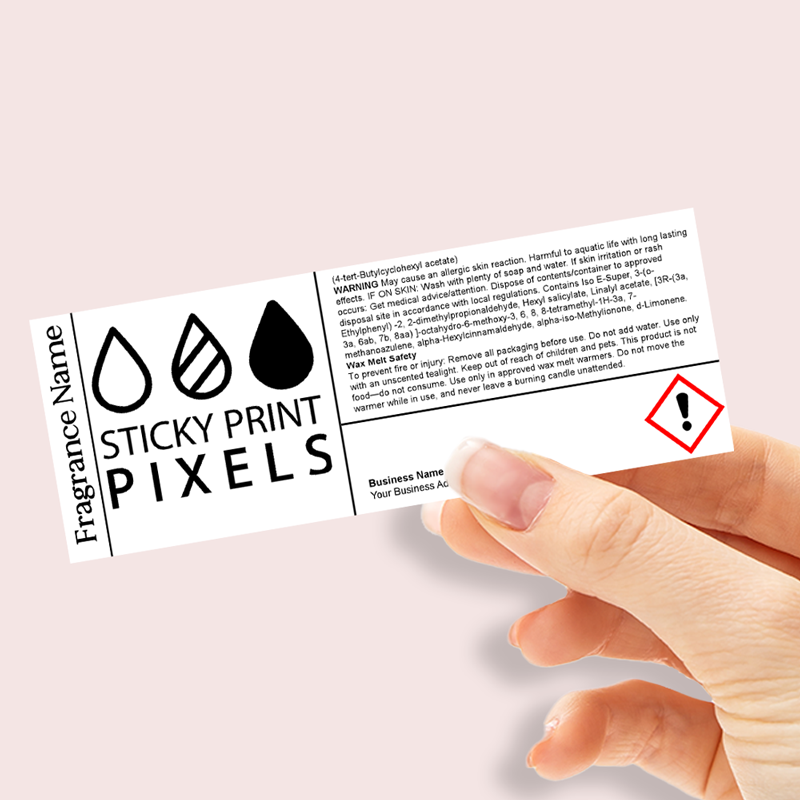
Designed for makers printing multiple fragrances in one batch. Segmented layouts allow each scent to be clearly separated while keeping required hazard information structured and readable. Ideal for collections, seasonal ranges and advent calendars.
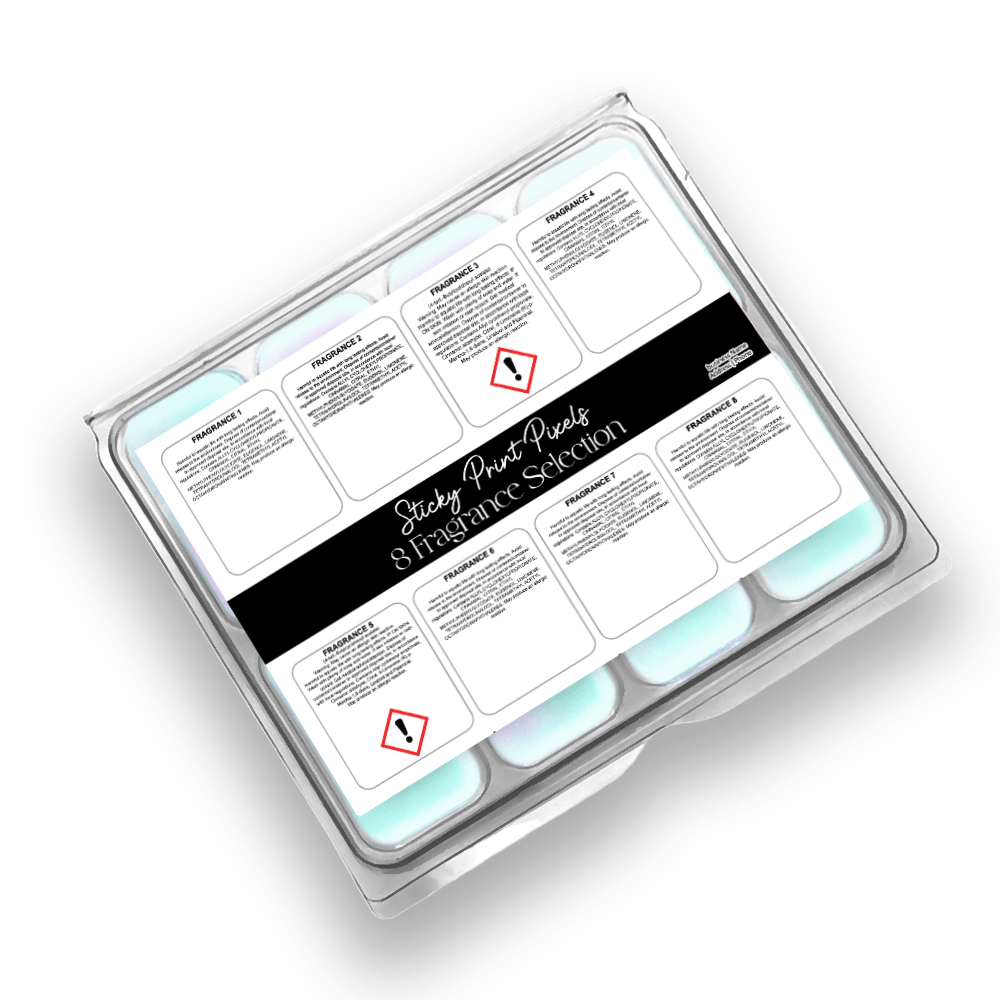
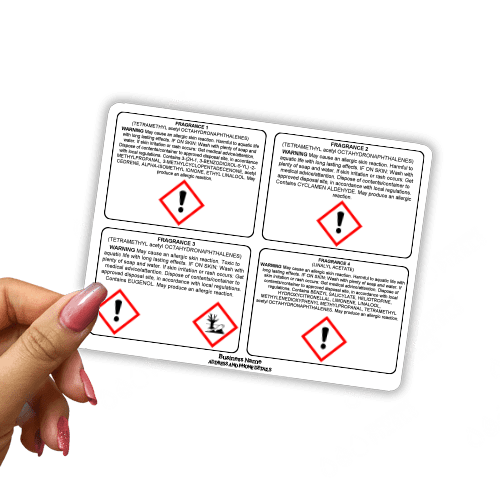
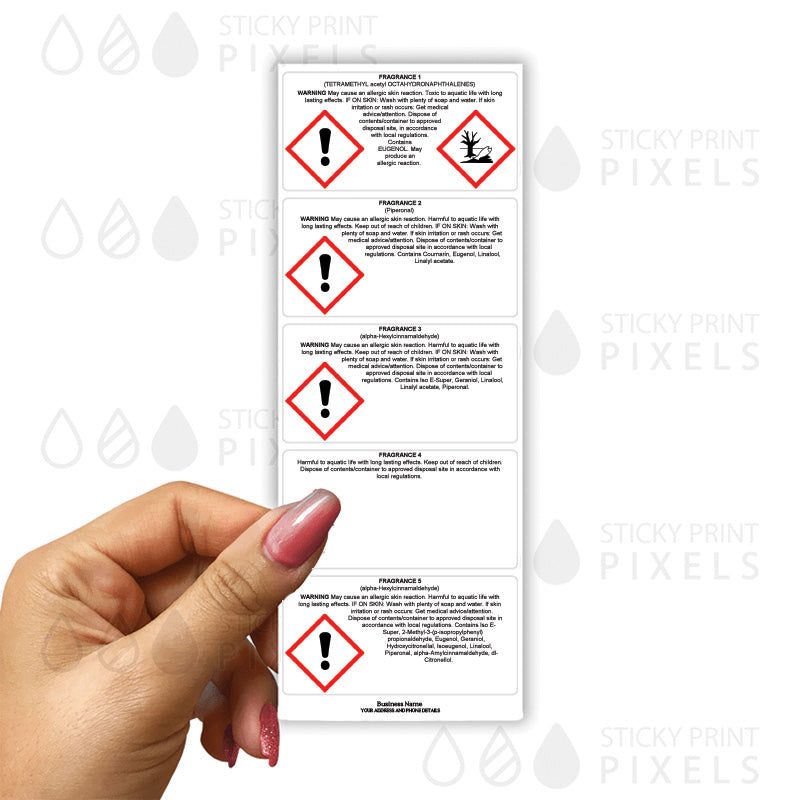
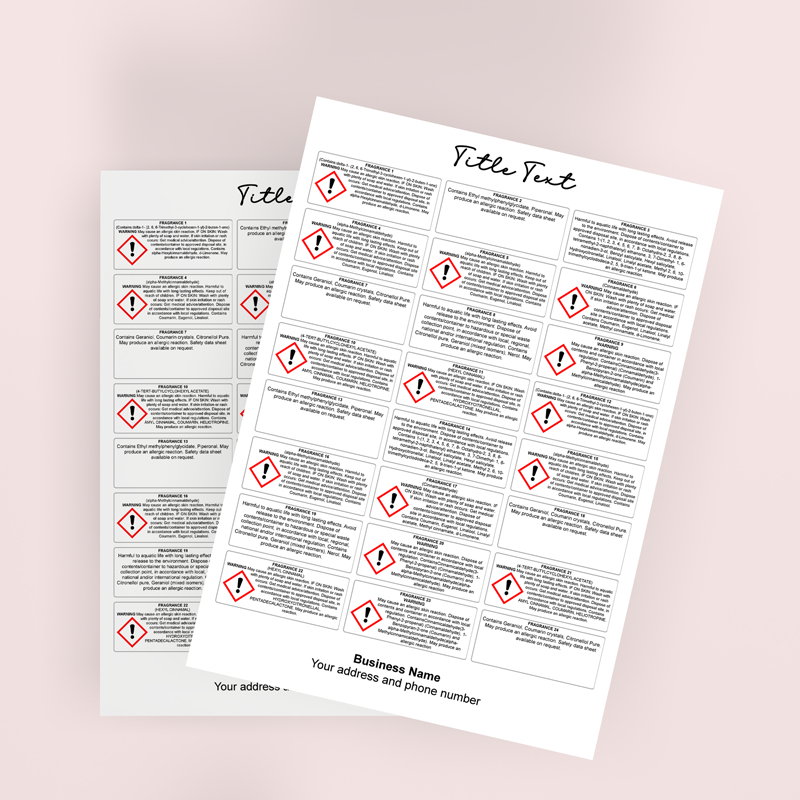
Why Properly Structured CLP Labels Matter for Wax Melts in the UK
Wax melts containing classified fragrance ingredients require CLP labelling when supplied to consumers in Great Britain. The information displayed on the label must reflect the classification data provided by the fragrance manufacturer and be presented clearly, proportionately and legibly.
Label structure is not simply about fitting text into a small space. Pictogram scaling, signal word prominence, hazard statement flow, and supplier identification placement must all remain visually balanced and readable across different packaging formats.
Poor layout decisions, such as overcrowding small labels, shrinking pictograms below recommended proportions, or compressing hazard statements, can reduce clarity and increase the risk of non-conforming presentation.
Each label is structured using supplier-provided classification data and laid out with careful attention to spacing, hierarchy and readability across clamshells, snap bars, boxed melts and multi-segment formats.
Common Wax Melt CLP Labelling Issues
- Using outdated fragrance classification data
- Scaling hazard pictograms below recommended visibility
- Fitting excessive text onto undersized labels
- Copying layouts without understanding fragrance concentration differences
- Misaligning required information when adding branding elements
CLP Labels for Other Home Fragrance Products
CLP labels structured for container candles, tins and jars. Layouts adjusted to suit varying fragrance concentrations and label sizes.
Reed Diffusers
Structured CLP labels for reed diffusers and oil-based fragrance systems, using supplier classification data.
Room Sprays
CLP labels for alcohol-based and water-based room sprays, with layout considerations for bottle formats and wrap labels.
Wax Melt CLP Labelling – Frequently Asked Questions
Do wax melts require CLP labels in the UK?
Wax melts require CLP labelling when they contain classified fragrance ingredients and are supplied to consumers. The required information is based on the classification data provided by the fragrance manufacturer. It is the responsibility of the product seller to ensure correct usage and application.
What information must appear on a wax melt CLP label?
Depending on the supplier’s classification data, labels may include hazard pictograms, signal words and specific statements. The exact content is determined by the fragrance formulation and concentration used in the finished product.
Frequently asked question
Yes. Branding elements such as logos or business names can be incorporated, provided required hazard information remains clearly visible and properly structured.
What happens if I use incorrect CLP information?
Using outdated or incorrect classification data can result in mislabelling. This may lead to stock being rejected by retailers or the need for reprinting. Always ensure you are using the most recent supplier-provided data.
Do CLP labels need to be a certain size?
Under GB CLP, minimum label dimensions are set out in Annex I and vary according to packaging volume. For small containers (up to 3 litres), the standard minimum label dimension is 52 × 74 mm, with larger sizes required as packaging volume increases.
Hazard pictograms must also meet minimum size requirements (at least 10mm × 10mm, measured on the red diamond frame, where packaging size permits).
In practice, label size must allow required hazard information to remain clear and legible. Very small labels can restrict layout structure and reduce readability, particularly where multiple hazard statements apply.
Selecting the largest suitable label size for your packaging allows clearer structure and improved readability.