CLP Labels for Room Sprays in the UK
Room spray CLP labels vary depending on the carrier base used. Alcohol-based, water-based and non-hazardous bases can produce different hazard classifications, signal words and pictogram requirements.
Each label is structured using your fragrance supplier’s classification data and formatted specifically for cylindrical bottles and wrap layouts.
Choose Your Room Spray CLP Base
10% Non-Hazardous Carrier Base Room Spray CLP
For formulations using non-hazardous carrier systems where classification is dependent on fragrance composition and percentage.
Label structure remains tailored to cylindrical spray bottles to ensure clear hazard presentation and proportionate pictogram sizing.


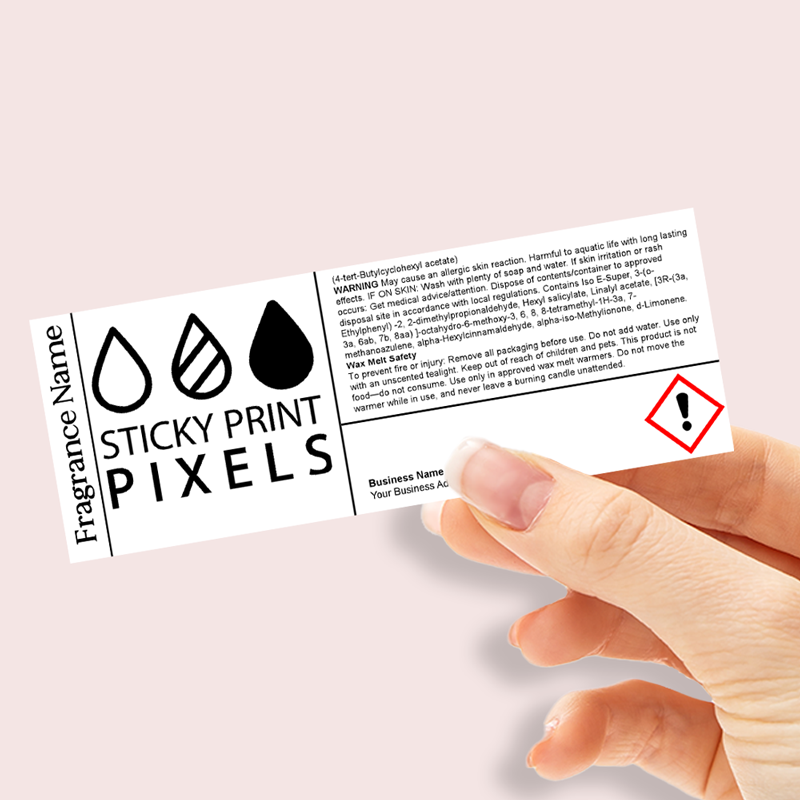
percentage dependent on suppliers CLP template
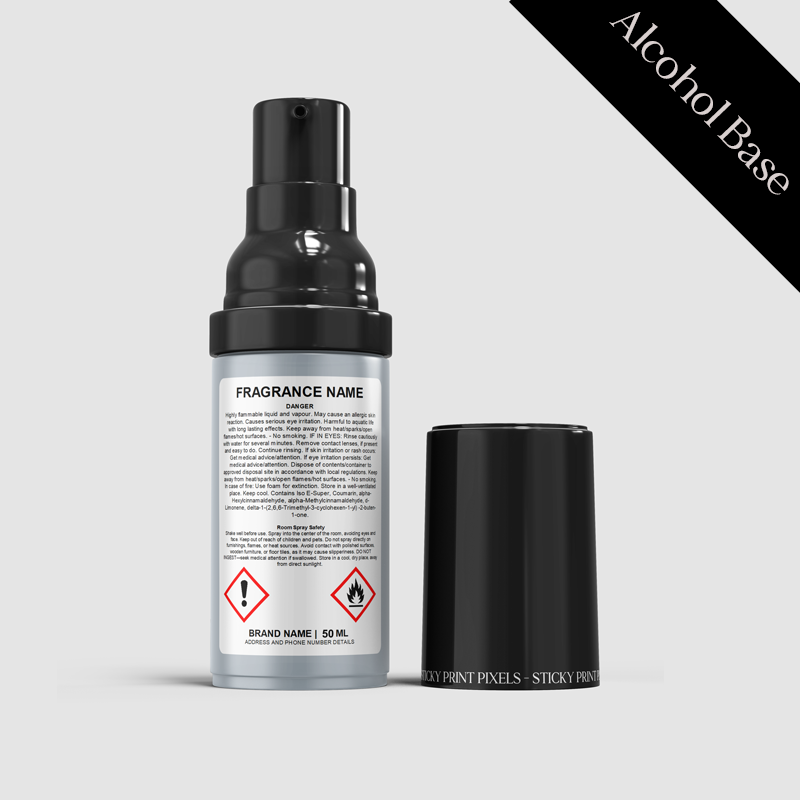
Perfumers Alcohol Room Spray CLP
Designed for alcohol-based formulations where flammable liquid classification may apply. Additional hazard elements and signal word placement are structured to reflect the carrier system where required.
Layouts are formatted specifically for tall cylindrical bottles and wrap formats.

Why Room Spray CLP Labelling Requires Careful Structure
Room spray CLP classification can vary depending on the carrier system used. Alcohol-based formulations may introduce flammable liquid classification, while water-based and non-hazard carrier systems are typically driven by fragrance concentration and composition.
Carrier choice affects signal word prominence, hazard pictogram requirements and overall layout structure. Tall cylindrical bottles and wrap labels introduce additional spatial constraints compared to flat packaging formats.
Clear hierarchy, correct pictogram scaling and balanced text flow are essential to maintain legibility across narrow or full-wrap bottle designs.
Each label is structured using supplier-provided classification data and formatted specifically for spray bottle geometry rather than adapted from candle or wax melt layouts.
Common Room Spray CLP Labelling Issues
- Ignoring flammable liquid classification for alcohol-based formulations
- Overcrowding long hazard statements on narrow wrap labels
- Shrinking pictograms to fit tall cylindrical bottles
- Misplacing signal words on full-wrap designs
- Copying candle CLP layouts onto spray packaging
CLP Labels for Other Home Fragrance Products
Candles
CLP labels structured for jar candles, tins and boxed formats. Layouts adapted for curved containers, base labels and varying fragrance concentrations.
Reed Diffusers
Structured CLP labels for reed diffusers and oil-based fragrance systems. Designed to reflect supplier classification data while maintaining clear layout hierarchy.
Wax Melt
CLP labels for clamshells, snap bars and boxed melts. Layouts structured for flat packaging formats with proportionate pictogram scaling.
Room Spray CLP – Frequently Asked Questions
Do alcohol-based room sprays require flammable pictograms?
Alcohol-based room sprays may require flammable liquid classification depending on the carrier system and final formulation. Where applicable, required hazard pictograms, signal words and statements must be displayed in line with supplier classification data.
Do water-based room sprays require the same CLP as alcohol-based sprays?
Not necessarily. Classification is determined by the final formulation. Water-based systems are typically driven by fragrance concentration and composition, while alcohol-based systems may introduce additional flammability considerations.
Can room spray CLP labels require tactile warnings?
Yes. Where a room spray is classified with certain hazard categories (such as flammable liquid classification supplied to consumers), tactile warning of danger may be required under CLP presentation rules.
Whether this applies depends on the specific hazard classification of the finished product.
Can hazard pictograms be reduced to fit narrow bottles?
Hazard pictograms must meet minimum size requirements and remain clearly visible. On narrow cylindrical bottles or full-wrap labels, layout planning must prioritise proportion and legibility rather than simply reducing elements to fit limited space.
Does base type affect the signal word?
Yes. Signal word selection is determined by the hazard classification of the finished formulation. Changes in carrier system or fragrance concentration may alter classification outcomes and therefore affect required label elements.
Do room spray CLP labels differ from candle or wax melt labels?
Yes. While fragrance classification may be the same in some cases, Bases such as alcohol-based formulations may also introduce additional hazard considerations not present in wax-based products.