Reed Diffuser CLP Labels – High Fragrance Load & Augeo Bases
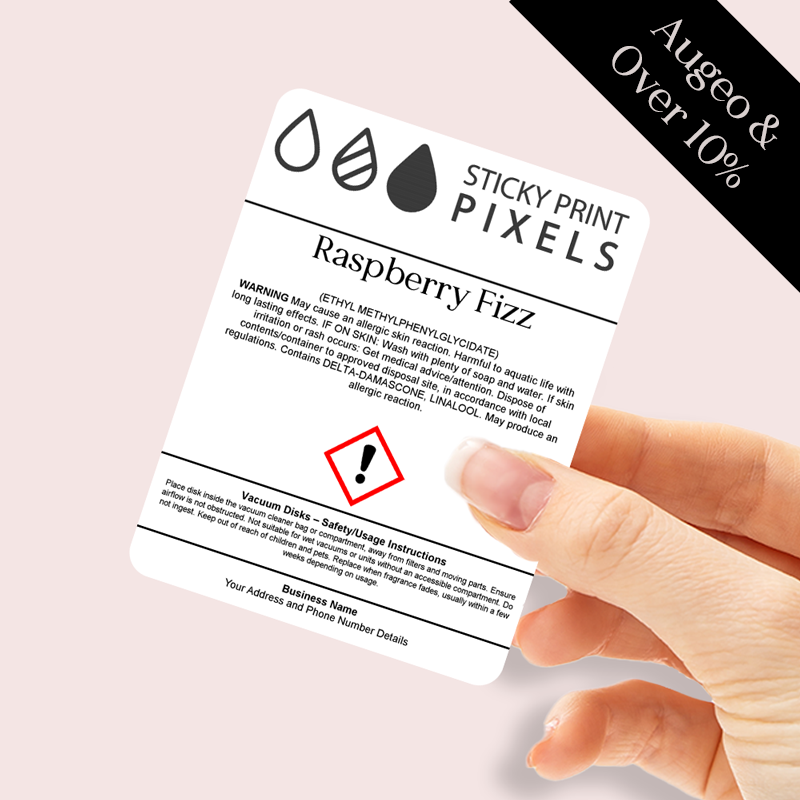
Reed diffuser formulations using higher fragrance concentrations or carrier systems such as Augeo often require carefully structured CLP labels. Classification is dependent on the exact fragrance percentage and supplier-calculated data for that specific base system.
These labels are formatted to accommodate environmental hazard pictograms, longer ingredient declarations and proportionate symbol sizing on cylindrical diffuser bottles. All CLP information is printed using manufacturer-provided classification data to ensure accurate and compliant presentation for the UK market.
Choose Your Reed Diffuser CLP Format
Choose Your Reed Diffuser Base
Augeo Carrier System
For formulations calculated in an Augeo carrier system at the fragrance percentage specified within the supplier’s CLP template (for example 15%, 20% or 25% depending on the manufacturer). Classification reflects the supplier-calculated data for that specific fragrance load and base ratio.
Hazard elements, signal words and pictograms are structured in line with the supplier’s published classification for that formulation.
Non-Hazardous Carrier Base (e.g. DPG)
For formulations using non-classified carrier systems (such as DPG or supplier-provided reed diffuser bases), where overall hazard classification is typically driven primarily by fragrance composition and concentration.
Select your carrier system and relevant supplier template from the product dropdown when placing your order.
High Fragrance Load Diffuser CLP (Augeo & Similar Bases)
For formulations using non-hazardous carrier systems where classification is dependent on fragrance composition and percentage.
Label structure remains tailored to cylindrical spray bottles to ensure clear hazard presentation and proportionate pictogram sizing.



Why Carrier Base Matters for Reed Diffuser CLP
Carrier base selection can influence hazard classification, signal word prominence and pictogram requirements. Formulations calculated at specific fragrance percentages in Augeo may produce different classification outcomes compared to non-hazard carrier systems such as DPG.
Reed diffuser ingredient declarations are often longer than wax-based products, which affects layout hierarchy and spacing on cylindrical bottle formats.
Each layout is structured to maintain correct pictogram proportion and clear text flow across wrap or split-label designs.
Common Reed Diffuser CLP Labelling Issues
- Ignoring base-dependent classification differences
- Overcrowding long ingredient declarations
- Shrinking environmental hazard pictograms
- Copying wax melt layouts onto bottle formats
- Misplacing signal words on wrap labels
CLP Labels for Other Home Fragrance Products
Candles
CLP labels designed for container candles, tins and boxed formats. Layouts are adjusted for curved vessels and limited print areas, ensuring hazard symbols and statements remain clear and proportionate.
Wax Melt
CLP labels created for clamshells, snap bars and boxed wax formats. Designed for flat packaging structures with controlled pictogram scaling and clear ingredient hierarchy.
Room Spray
CLP formats structured for alcohol-based, water-based and non-hazard carrier systems. Designed to accommodate flammable classifications, tactile warnings where required, and cylindrical bottle layouts.
Reed Diffuser CLP – Frequently Asked Questions
Do reed diffusers require CLP labels in the UK?
Yes... if the finished formulation is classified as hazardous under GB CLP, labelling is legally required when supplying to consumers in Great Britain.
Classification depends on the fragrance composition, concentration and carrier system used. Always refer to your supplier’s CLP template or classification data for the specific formulation.
Does Augeo change the hazard classification?
It can. Carrier base selection may influence the final mixture classification depending on the fragrance load and supplier-calculated data.
Formulations calculated in Augeo at specific percentages (for example 15%, 20% or 25% depending on the supplier template) may produce different classification outcomes compared to non-classified carrier systems. Always use the classification provided for your exact base and ratio.
Does DPG count as non-hazard for CLP purposes?
DPG (Dipropylene Glycol) is often sold as a non-classified carrier system. However, CLP classification applies to the finished mixture not just the base.
If the fragrance component triggers classification at a given concentration, the final product may still require hazard labelling regardless of the base being non-classified.
What other bases are none hazardous?
Many suppliers offer proprietary reed diffuser bases marketed as non-hazardous or non-classified. These are often glycol-based carrier systems. Always check the SDS regardless of your suppliers marketing to make sure it is unclassified.
However, whether a finished product requires CLP labelling depends on the final mixture and fragrance percentage. Always refer to your supplier’s calculated CLP data for the specific base and formulation used.
Can you supply them in smaller label formats?
Reed diffuser formulations often produce longer ingredient declarations and may require environmental hazard pictograms.
CLP guidance requires hazard pictograms to measure at least 10mm × 10mm (measured on the red diamond frame) where packaging size permits. On smaller bottle formats, this can significantly restrict layout space.
In many cases, very small labels simply do not provide sufficient room to present all mandatory elements clearly and proportionately. Where minimum size and legibility requirements cannot be met, smaller formats will not be offered.