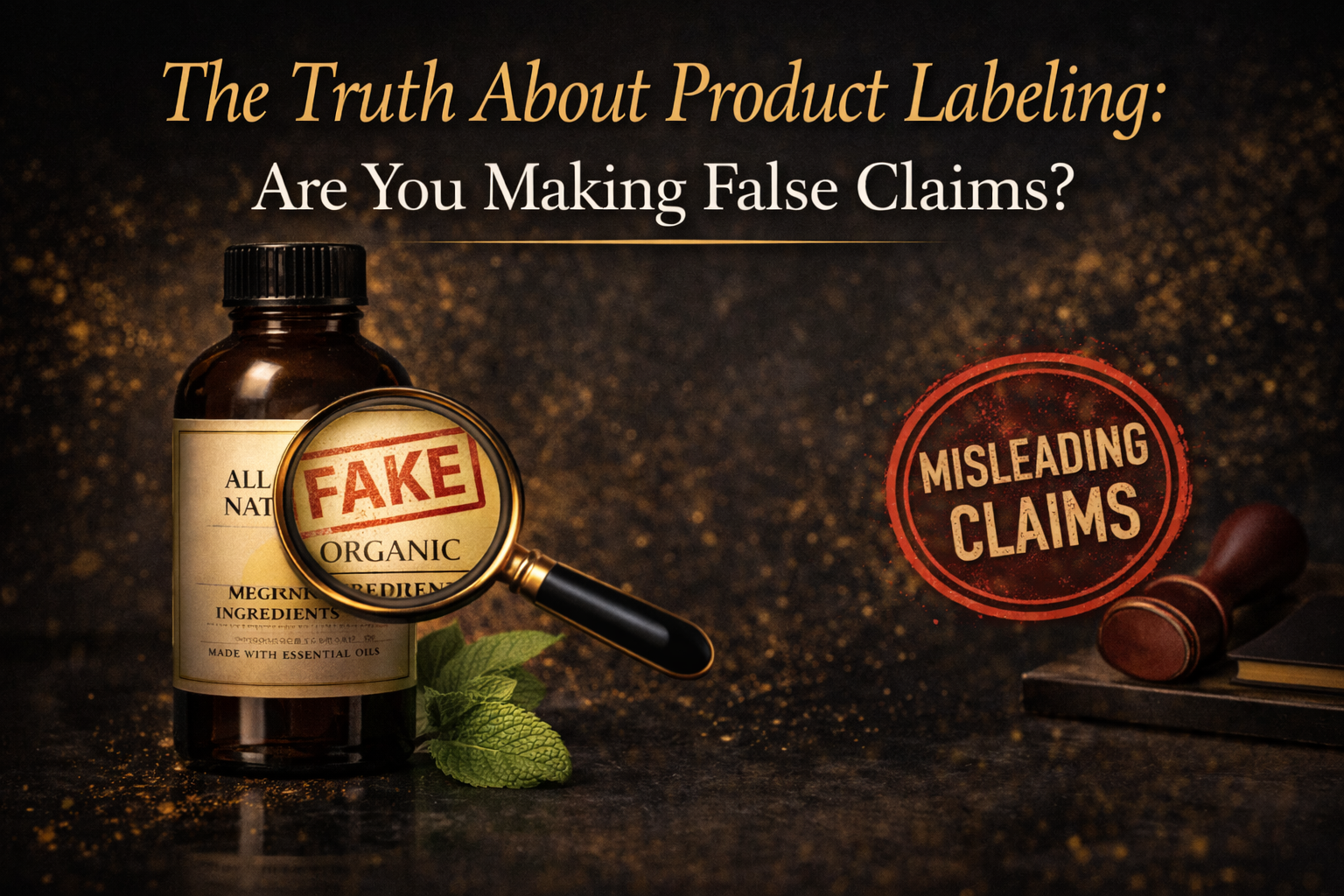
The Truth About Product Labeling: Are You Making False Claims?
Ensure your product labels are accurate, transparent, and compliant with industry standards.
Why Is “100% Soy Wax” a False Claim?
Stating that a wax melt is “100% Soy Wax” can be misleading if it contains fragrance oils, dyes, or mica. Instead, consider using:
- “Made with Soy Wax”
- “Soy Wax Blend” (if other waxes are present)
- “Soy Wax Melts with Fragrance”
Common False Labeling Issues
“100% Natural” in Skincare & Bath Products
Unless a product is free from artificial ingredients, this claim can be misleading. A better alternative: “Made with Natural Ingredients” or “Naturally Derived Ingredients”.
“Chemical-Free” Cleaning Products
Everything, including water, is made up of chemicals. Instead, brands should use “Free from Harsh Chemicals” or “Non-Toxic Formula”.
“Essential Oil-Based” When Synthetic Fragrance Is Present
If a product includes synthetic fragrance, it should be labeled as “Infused with Essential Oils” or “Contains Essential Oils & Fragrance”.
The Impact of Honest Labeling
False claims can lead to:
- Loss of customer trust
- Negative reviews or complaints
- Legal consequences
How to Ensure Your Labels Are Accurate
- Review Your Ingredients – Ensure all components are correctly represented.
- Avoid Absolutes – Words like “100%” should only be used when entirely accurate.
- Clarify Misleading Phrases – Specify which ingredients are naturally derived.
- Stay Compliant – Keep up with industry regulations.
Final Thoughts
Accurate labeling is crucial for both trust and compliance.
Share:
CLP Labeling Update: Say Goodbye to Colored Backgrounds and Tiny Text
IFRA 51 Explained: The Short Simplified Version