CLP & Compliance
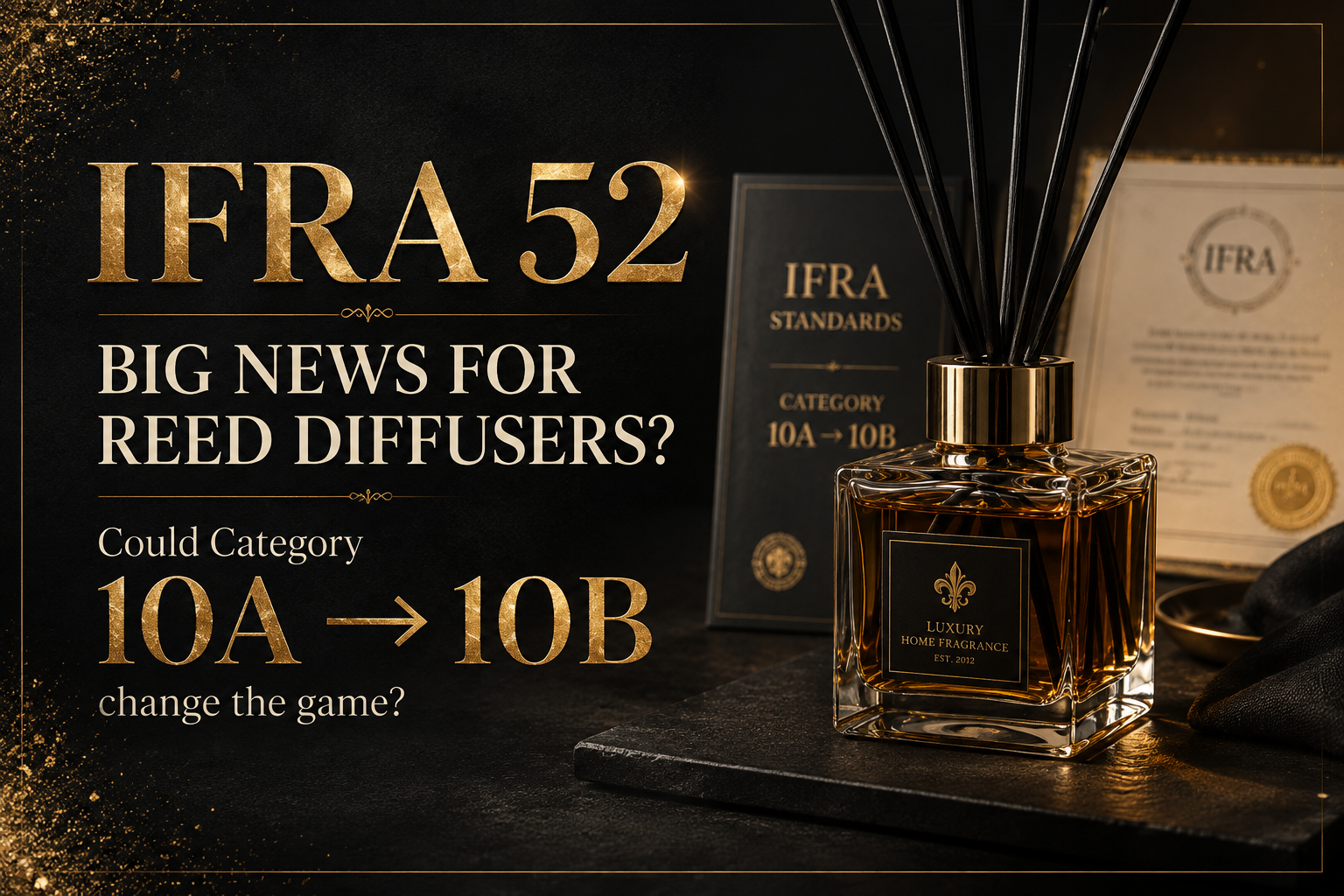
IFRA 52 Could Be HUGE for Reed Diffuser Makers. Here’s Why
A potentially huge IFRA update could be on the way for reed diffuser makers. With diffuser categorisation under review for IFRA 52, could some fragrance oils soon have much higher permitted usage levels? Here’s what we know so far, why Category 10A matters and why the industry should be watching closely.
Read moreabout IFRA 52 Could Be HUGE for Reed Diffuser Makers. Here’s Why
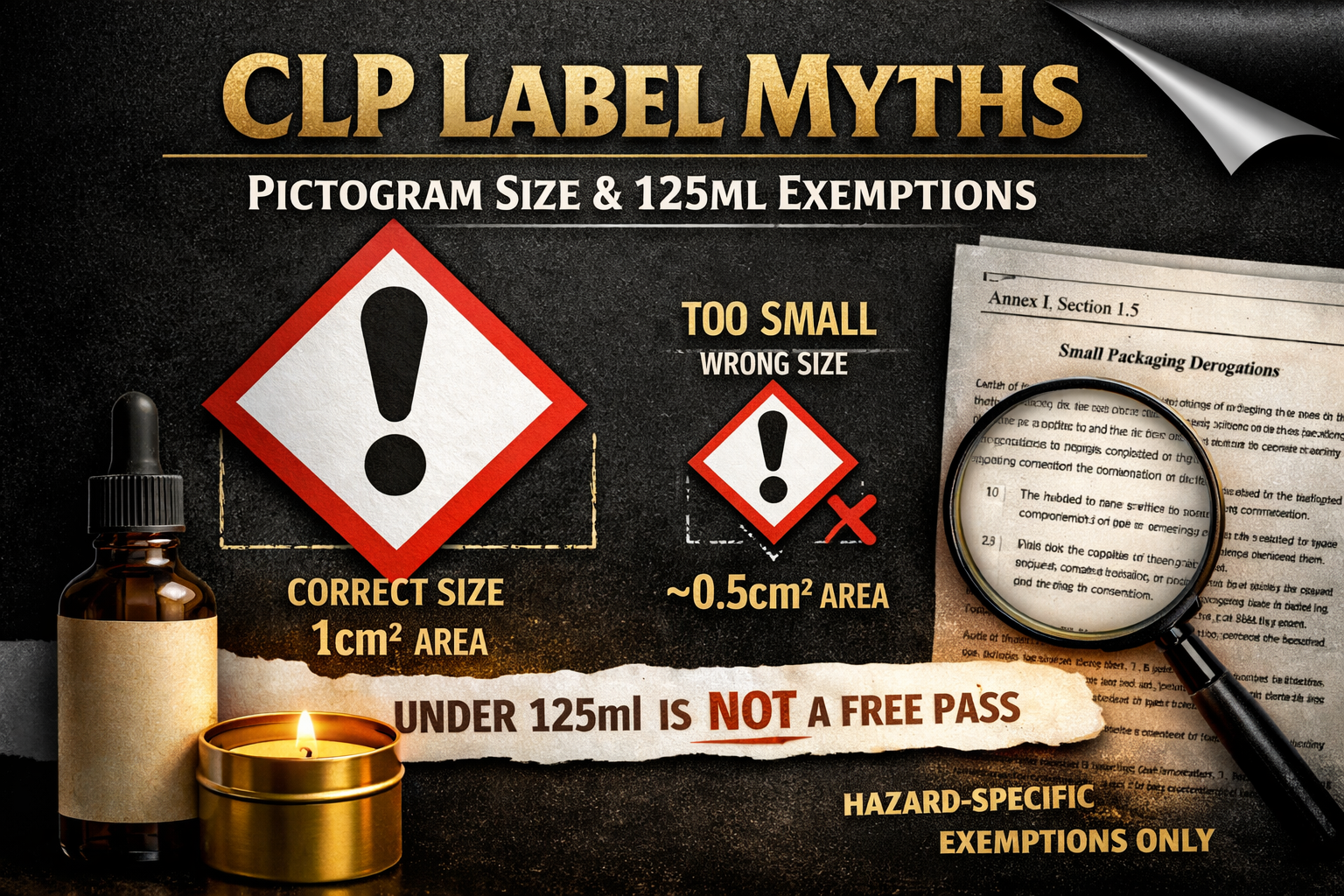
CLP Label Size Rules Explained: Pictogram Measurements and 125ml Exemptions
Two CLP myths keep wrecking otherwise decent labels: that hazard pictograms only need to be “1cm”, and that anything under 125ml can ditch most of the safety text. Both are wrong. This article explains how CLP pictogram sizing actually works, why small label exemptions are hazard-specific, and why most home fragrance products still need full CLP labelling.
Read moreabout CLP Label Size Rules Explained: Pictogram Measurements and 125ml Exemptions
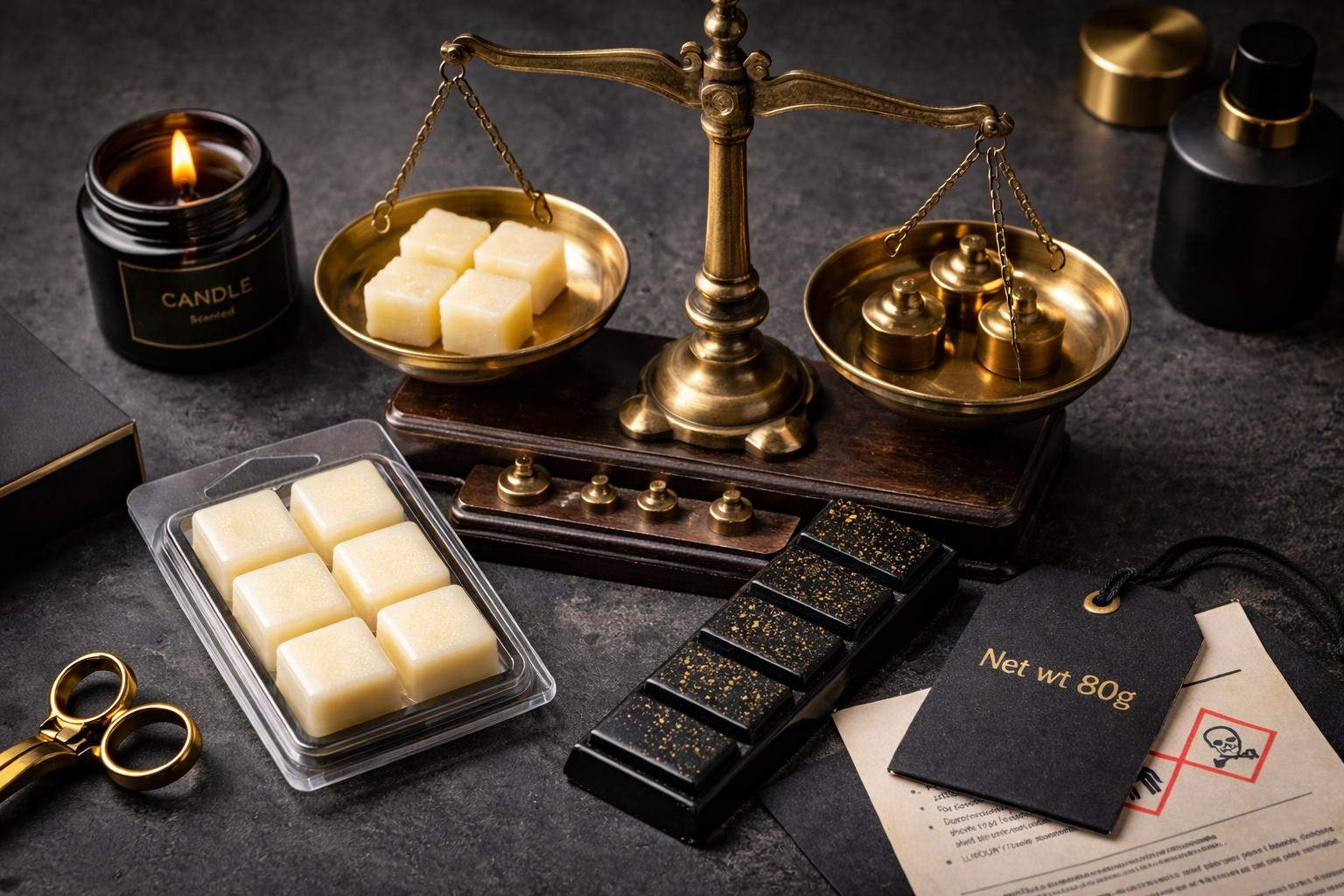
Is Net Weight Required on a CLP Label? Nominal Quantity Explained (UK Wax Melts)
Does a CLP label need to show net weight? Short answer: no. Longer answer: it’s more complicated. This guide explains how CLP, Weights and Measures, and product safety law interact for UK wax melts, what “nominal quantity” actually means, when weight is required, and why Trading Standards advice can differ.
Read moreabout Is Net Weight Required on a CLP Label? Nominal Quantity Explained (UK Wax Melts)

Scented Sizzlers & CLP: Why You’ll Hear 10% and 100%
Read moreabout Scented Sizzlers & CLP: Why You’ll Hear 10% and 100%

Safety Labels Explained: Do You Need Them If You Already Have CLP?
Most makers think CLP covers all their safety information... but it doesn’t. Here’s what safety labels you actually need for candles, wax melts, diffusers, room sprays and more, and how GPSR fits into everything.
Read moreabout Safety Labels Explained: Do You Need Them If You Already Have CLP?
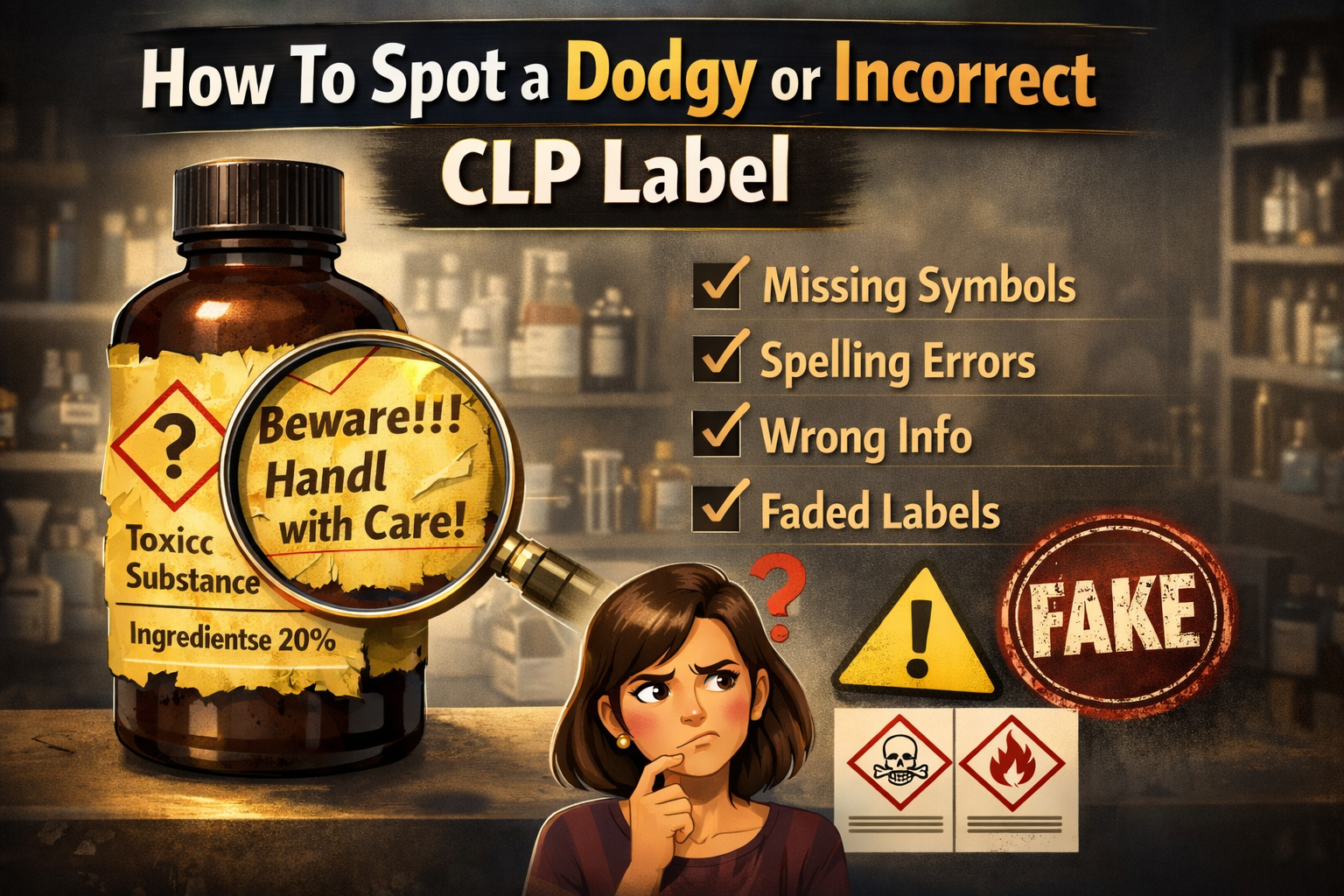
How To Spot a Dodgy or Incorrect CLP Label
A quick, practical guide to spotting when a CLP label looks off. Learn how to compare it with the SDS, check pictograms and avoid using incorrect or outdated templates.
How To Read An IFRA Certificate: Simple Guide For UK Home Fragrance Makers
IFRA certificates look complex, but once you know where to look they are surprisingly simple. This guide shows UK home fragrance makers how to read IFRA limits properly and why IFRA on its own does not guarantee a safe or compliant product.
Read moreabout How To Read An IFRA Certificate: Simple Guide For UK Home Fragrance Makers

2025 brought new banned and restricted ingredients in both the EU and GB, and most makers won’t know because suppliers rarely update their SDS. This is the blunt, no-bullshit guide to what changed, what it means, and which ingredients you should double-check before something bites you.

What an SDS Actually Is (And What Makers Really Need It For)
SDS documents look intimidating, but most makers only need a tiny bit of what is inside them. This simple guide explains what an SDS is, what it is really for, and how wax melt and candle makers can use it without getting buried in jargon.
Read moreabout What an SDS Actually Is (And What Makers Really Need It For)